
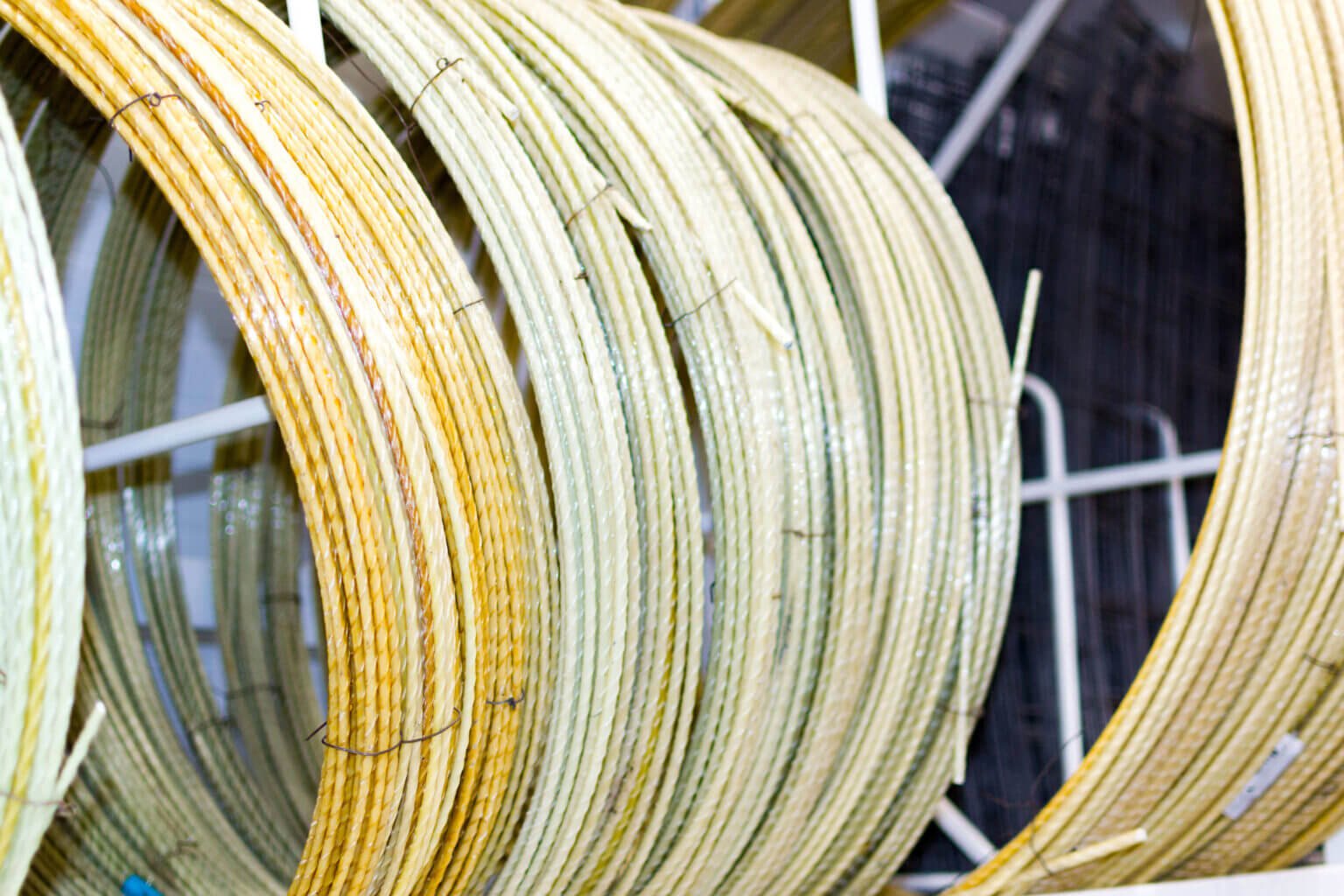
Composite (GFRP)Rebar
Advantages
The basis for our GFRP rebar is glass fiber (roving) together with a modified epoxy binder.
The advantages of fiberglass reinforcement are many. Here are the most significant of them:

Low density. 75% as low as steel

High tensile strength. 1000-1500 Mpa.

Highly efficient material due to extremely low thermal conductivity

Long service life. 80 years of guaranteed maintained properties

Excellent resistance to aggressive chemicals

Relatively low price and significant budget savings
| Material | Steel | GFRP |
|---|---|---|
| Tensile Strength [MPa]/N/mm^2 |
500 | 1000+ |
| ShearStrength | 120 | 170 |
| Bond Strength [MPa]/N/mm^2 |
14 | 12.5 |
| Compression [MPa]/N/mm^2 |
500 | 450 |
| Modulus of Elasticity [Gpa] |
160-200 | 50-55 |
| Elongation [%] | 25 | 4 |
| Durability | Terms are prescribed in special building codes |
Not less than 80 years | Durability [ton/m^3] |
7.8 | 1.9 | Corrosion resistance to aggressive environment |
Appearance of Rust products |
Strainless material preserving properties even in alkaline concrete environment |
Ecological Compatibilty | Ecological Friendly Material |
Does not email harmful and toxic substrance during stora e and use |
Electrical Compatibilty | Electrical Friendly Material Material |
Dielectric |

GFRP Rebars Delhi
Composite GFRP rebars is one of the most promising building materials. Technology does not stand still, and our products develop in parallel with the improvement of the entire industry.
GFRP Rebars & Its Application.
Composite GFRP rebars in their application are gaining popularity in India. Composite GFRP rebars are used in the construction of various objects:
- Low-rise buildings
- Heavy Concrete
- Roadbeds, the foundation of railways
- Reinforced concrete floors
- Industrial and civil slabs
- Monolithic Construction With Light
- Bridges
- Pools, septic tanks
- Ports infrastructure
- Culverts and water-holding channels.
- Low-rise buildings
- Heavy Concrete
- Roadbeds, the foundation of railways
- Reinforced concrete floors
- Industrial and civil slabs
- Monolithic Construction With Light
- Bridges
- Pools, septic tanks
- Ports infrastructure
- Culverts and water-holding channels.
Myths about the material
Almost any construction novelty is undergoing the process of adaptation to the market with some snags. The fact is that builders have not sufficiently studied composite reinforcement, so manufacturing companies are introducing slightly different production technologies, which is why GFRP rebars do not always turn out the way they should.
Well, because the GFRP rebars will be painted in some color, it will not become stronger – at most, more aesthetically pleasing. Yes, and some dye additives can only negatively affect performance, so all manufacturer’s claims about improved properties must be documented, including the results of technical tests.
Only adhesion with concrete, not the strength of composite reinforcement, depends on the number of ribs, so you should not fall for this trick. The only thing is, if sand spraying is performed on the composite reinforcement, then we can say that it indirectly increases strength. In general, the minimum adhesion strength should be 9.2 MPa. Every manufacturer should provide a material with such properties no matter the technology used.
Yes, composite reinforcement can be broken by hand (a very-very strong hand), but this does not mean its fragility because the loads during construction are longitudinal, and when broken, they it transverse.
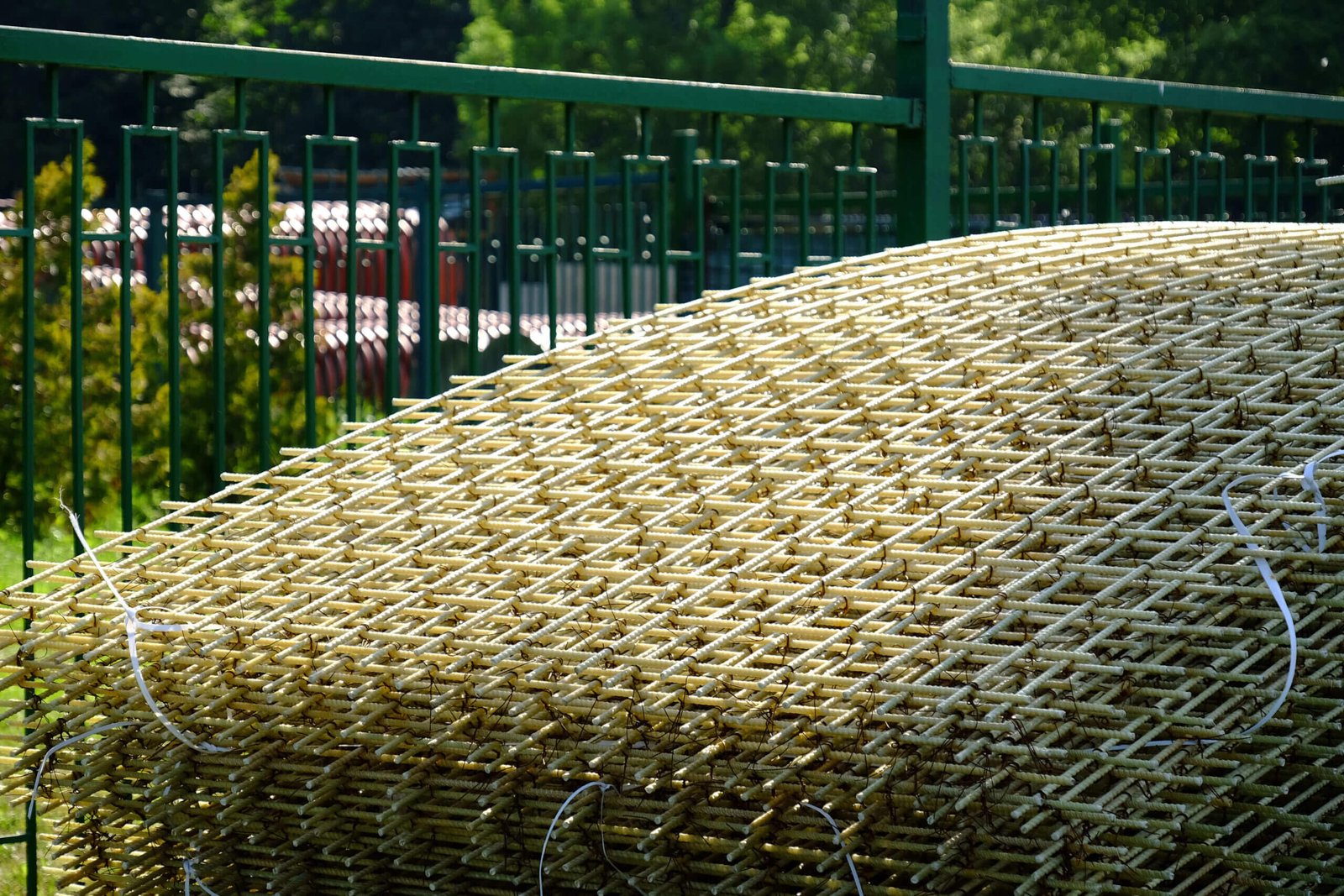
The Cost of GFRP Rebar: Metal or Fiberglass
Almost any construction novelty is undergoing the process of adaptation to the market with some snags. The fact is that builders have not sufficiently studied composite reinforcement, so manufacturing companies are introducing slightly different production technologies, which is why GFRP rebars do not always turn out the way they should.
| Fiber Glass Rebar | |
|---|---|
| Weight | Diameter |
| 0.46kg | ⌀ 4.5 |
| 0.57kg | ⌀ 6 |
| 0.94kg | ⌀ 7 |
| 1.23kg | ⌀ 8 |
| 1.65kg | ⌀ 10 |
| 2.48kg | ⌀ 12 |
| 3.24kg | ⌀ 14 |
| 4.87kg | ⌀ 16 |
| 6.28kg | ⌀ 18 |
| 8.08kg | ⌀ 20 |
| 9.80kg | ⌀ 22 |
| Metal Rebar | |
|---|---|
| Weight | Diameter |
| 2.75kg | ⌀ 6 |
| 4.74kg | ⌀ 8 |
| 7.40kg | ⌀ 10 |
| 10.65kg | ⌀ 12 |
| 14.52kg | ⌀ 14 |
| 18.93kg | ⌀ 16 |
| 24.00kg | ⌀ 18 |
| 35.76kg | ⌀ 22 |
| 46.22kg | ⌀ 25 |
| 58.02kg | ⌀ 28 |
| 75.79kg | ⌀ 32 |
The logic here is this: non-metallic reinforcement has higher than structural steel tensile strength, so a GFRP rebar of a smaller diameter will withstand the same load as thicker steel reinforcement. Based on this, it is concluded that less plastic is needed to reinforce the structure than metal.
This is where the pricing benefit comes from. Is it so? Indeed, it is worth realizing that each concrete structure is a complex physical model that requires engineering calculations for strength, punching, stability, and other characteristics.