
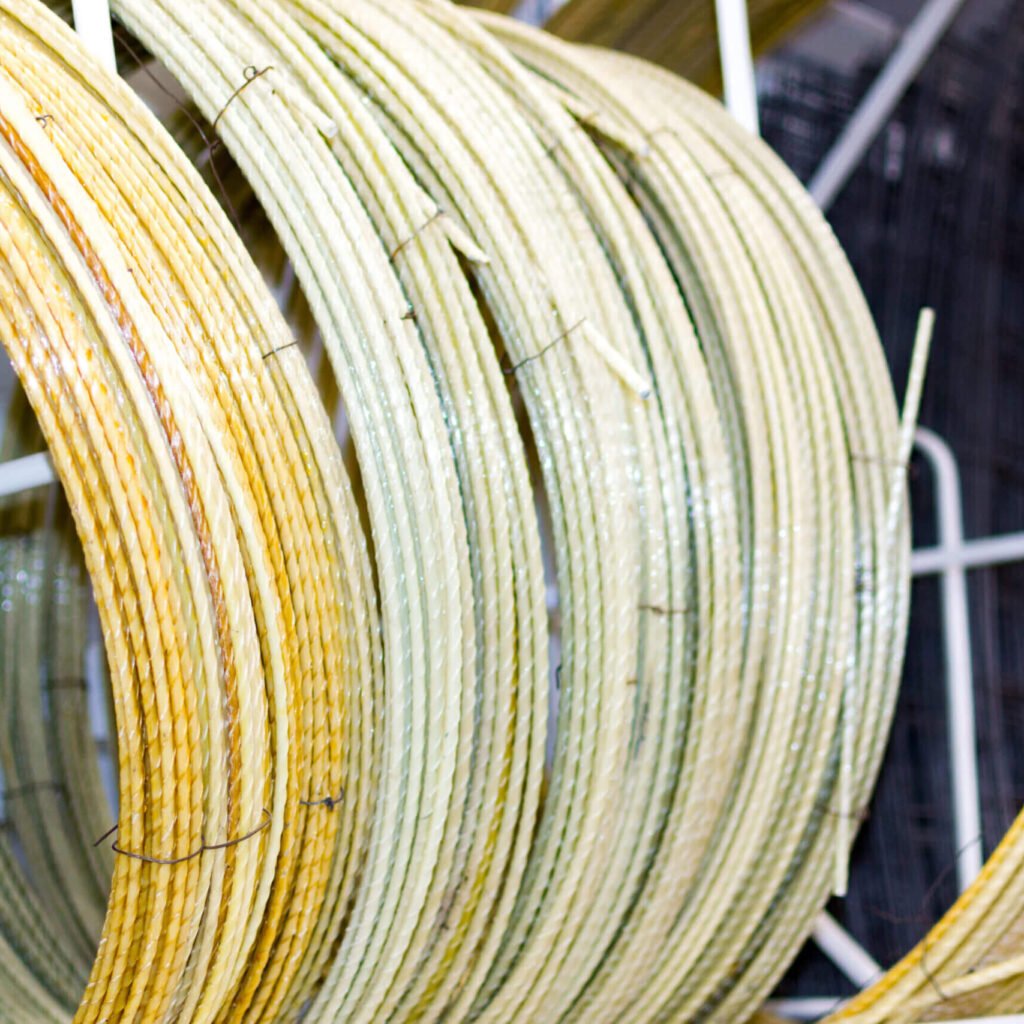
GFRP rebar stands for Glass Fiber Reinforced Polymer. A type of composite material called GFRP rebar, commonly referred to as fiberglass reinforcement, is used as an alternative to traditional steel reinforcement in buildings made of concrete. It is made by combining high-strength glass fibers with a polymer resin matrix.
GFRP Rebar in Delhi/NCR
GFRP rebar offers several advantages over steel reinforcement, including:
Corrosion resistance: Unlike steel, which can corrode when exposed to moisture and specific chemicals, GFRP rebar has a high level of corrosion resistance. This makes it ideal for structures in aggressive environments such as coastal areas or chemical plants.
High strength-to-weight ratio: GFRP rebar is significantly lighter than steel rebar while offering comparable or higher tensile strength. This light weight makes it easier to handle and transport, reducing labor and logistics costs.
Non-magnetic and non-conductive: GFRP rebar does not conduct electricity or magnetism. This property makes it suitable for applications where electromagnetic interference needs to be minimized, such as in hospitals, data centers, or sensitive electronic facilities.
Thermal compatibility: GFRP rebar has low thermal conductivity, which means it expands and contracts at a similar rate to concrete. This characteristic reduces the risk of cracking and improves the overall durability of the structure. GFRP rebar haryana
Design flexibility: GFRP rebar can be manufactured in custom lengths, shapes, and configurations to suit specific project requirements. It can be easily bent or cut on-site, allowing for versatile design possibilities.
GFRP rebar is commonly used in a variety of construction projects, including buildings, bridges, tunnels, marine structures, and infrastructure exposed to harsh environments. It provides long-term durability and helps mitigate the problems associated with corrosion in concrete structures.
GFRP rebar specification?
The specifications of GFRP (Glass Fiber Reinforced Polymer) rebar may vary depending on the manufacturer and specific project requirements. However, the following are some standard requirements that are usually taken into account for GFRP rebar in delhi/ncr
Dimensions: The diameters of GFRP rebar vary from 6 mm (0.24 inches) to 40 mm (1.57 inches), generally. The specific diameter is chosen based on the structural design and load requirements of the project.
Tensile Strength: GFRP rebar has a high tensile strength, typically ranging from 400 MPa (58,000 psi) to 1,200 MPa (174,000 psi) or even higher. The tensile strength determines the load-carrying capacity and durability of the rebar.
Modulus of Elasticity: The modulus of elasticity of the GFRP rebar represents its stiffness or resistance to deformation. It typically ranges from 30 GPa (4.35 million psi) to 60 GPa (8.70 million psi).
Length: GFRP rebar is available in standard lengths, such as 6 meters (20 feet), 12 meters (40 feet), or longer. However, custom lengths can also be manufactured as per project requirements.
Coating: GFRP rebar may have a protective coating to provide additional durability and resistance against environmental factors. The coating can help enhance the bond between the rebar and the concrete.
Standards and Certifications: GFRP rebar should meet relevant industry standards and certifications, such as ACI 440, ASTM D7957, ISO 10406, or other regional codes and guidelines.
Use of GFRP Rebar
GFRP (Glass Fiber Reinforced Polymer) rebar can be used in various applications where traditional steel reinforcement may not be suitable or presents limitations. The following are some typical applications for GFRP rebar:
Corrosive Environments Prone: GFRP rebar is very resistant to corrosion, making it an excellent choice for constructions located in such areas. This includes coastal areas, marine structures, wastewater treatment plants, and chemical processing facilities.
Infrastructure Projects: GFRP rebar can be used in infrastructure projects such as bridges, highways, tunnels, and retaining walls. It’s corrosion resistance and high strength make it a durable alternative to steel reinforcement, especially in areas with high chloride content or aggressive soil conditions.
Reinforced Concrete Buildings: GFRP rebar can be utilized in reinforced concrete buildings, including commercial and residential structures. It provides long-term durability and can help extend the lifespan of the building by reducing the risk of corrosion-induced deterioration.
Transportation and Rail: GFRP rebar is suitable for transportation infrastructure projects, including roadways, airport runways, and rail systems. Its lightweight nature makes it easier to handle and transport, reducing construction time and costs.
Water and Wastewater Structures: GFRP rebar is often used in water-related structures such as water treatment plants, reservoirs, dams, and water retaining structures. Its corrosion resistance helps maintain the structural integrity of these critical water infrastructure components.
Rehabilitation and Retrofitting: GFRP rebar can be used in the rehabilitation and retrofitting of existing structures. It provides a corrosion-resistant solution and can help enhance the structural performance and service life of deteriorated or aging infrastructure.